
|
Home | ||
The Ajanta Caves |
|
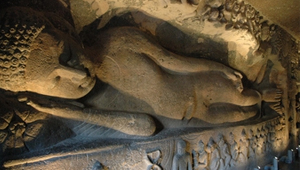 The Ajanta Caves are a series of 29 Buddhist cave temples in Ajanta, India, some of which date from the 2nd century BC. Encompassing both Theravada and Mahayana Buddhist traditions, the Ajanta caves preserve some of the best masterpieces of Buddhist art in India. Many visitors explore the Ajanta Caves in conjunction with the nearby Ellora Caves.
 The Ajanta Caves were carved in the 2nd century BC out of a horseshoe-shaped cliff along the Waghora River. They were used by Buddhist monks as prayer halls (chaitya grihas) and monasteries (viharas) for about nine centuries, then abruptly abandoned. They fell into oblivion until they were rediscovered in 1819. |
|
Bibi ka Maqbara |
Top^ |
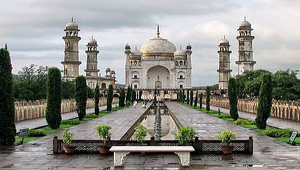 Bibi Ka Maqbara is situated 5 km away from Aurangabad. Aurangazeb's son, Prince Azam Shah built it in 1678 in the memory of his mother Begum Rabia Durani. This mausoleum is a replica of the famous Taj Mahal. Bibi Ka Maqbara is situated 5 km away from Aurangabad. Aurangazeb's son, Prince Azam Shah built it in 1678 in the memory of his mother Begum Rabia Durani. This mausoleum is a replica of the famous Taj Mahal.Despite the layout and surrounding of the tomb is very much similar to Taj Mahal, somehow the architecture fails to produce the magic of the Taj. Hence, it is considered to be a poor imitation of the Taj Mahal. The chief architect of the monument is a Persian called Ustad - Ata - Ullah. The inscription on the walls of the tomb reveals that it cost precisely Rs. 665,283 and 7 Annas to build this monument. |
|
Sunheri Mahal |
Top^ |
 The Sunheri Mahal was constructed by a Bandalkand chief who came with Auranzeb into the Dakhan. The Mahal is located in Paharsingpura, which is a suburb of Aurangabad. The structure is made of stone and lime. The Mahal has a high pedestal but it is now in dilapidations. The paintings in the Mahal were once painted of gold and so the name Sunheri Mahal. The Sunheri Mahal was constructed by a Bandalkand chief who came with Auranzeb into the Dakhan. The Mahal is located in Paharsingpura, which is a suburb of Aurangabad. The structure is made of stone and lime. The Mahal has a high pedestal but it is now in dilapidations. The paintings in the Mahal were once painted of gold and so the name Sunheri Mahal.The Sunheri Mahal finishes the Mughal grandness with its remnants of glory that rejects to fade. Indians are charged Rs 10 and foreigners Rs 100 as entrance fee and the timings are from 8 am - 6 pm. |
|
Aurangabad Caves |
Top^ |
 Aurangabad Caves are artificial caves, dug out of the rather soft rock during the 6th and 7th century. This caves are found on two separate locations, called Western Group Caves (caves 1-5) and Eastern Group Caves (caves 6-10), about 1km from each other. Each group has five caves. The architecture and iconography is influenced by Tantric Hinduism. Aurangabad Caves are artificial caves, dug out of the rather soft rock during the 6th and 7th century. This caves are found on two separate locations, called Western Group Caves (caves 1-5) and Eastern Group Caves (caves 6-10), about 1km from each other. Each group has five caves. The architecture and iconography is influenced by Tantric Hinduism.Cave four of the Western Group Caves is the oldest cave. It is a Hinayana Chaitya with a ridged roof like the Karla Cave near Lonavala. Hinayana (Sanskrit: Lesser Vehicle) is the more orthodox, conservative schools of Buddhism. Chaitya (Sanskrit) is the word for a funeral monument. There is a stupa in front of it, now partially collapsed. The other four Western caves are viharas, which are an early type of Buddhist monastery consisting of an open court surrounded by open cells accessible through an entrance porch. The viharas in India were originally constructed to shelter the monks. Cave 3, the most fascinating cave of the Western Group, is supported by 12 finely carved columns. They show sculptures portraying scenes from the Jataka tales. |
|
The Ellora Caves |
Top^ |
 Ellora Caves are situated in Maharashtra, at a distance of approximately 30 km from the city of Aurangabad. Founded in the period between 5th century and 10th century AD, these caves were declared as one of the World Heritage Sites by UNESCO, a number of years back. They are believed to have been built by the rulers of the Rashtrakuta Dynasty and serve as the epitome of rock-cut architecture in India. The total number of caves at Ellora is 34 and they represent the three different religions of the world - Hinduism, Buddhism and Jainism. Ellora Caves are situated in Maharashtra, at a distance of approximately 30 km from the city of Aurangabad. Founded in the period between 5th century and 10th century AD, these caves were declared as one of the World Heritage Sites by UNESCO, a number of years back. They are believed to have been built by the rulers of the Rashtrakuta Dynasty and serve as the epitome of rock-cut architecture in India. The total number of caves at Ellora is 34 and they represent the three different religions of the world - Hinduism, Buddhism and Jainism.Ellora Caves were carved out of the vertical face of the Charanandri hills and comprise of temples as well as monasteries. There are total twelve Buddhist Caves at Ellora (numbered 1 to 12), while the Hindu Caves number seventeen (13 to 29). On the other hand, the Jain Caves excavated at the site are only five in number (numbered 30 to 34). The co-existence of Hindi, Jain and Buddhist Caves, at the same site, serves as a proof of the fact that religious harmony prevailed during that period. |
|
Jama Masjid |
Top^ |
 The Jama Masjid is located near the Killa Arrak. It has 50 polygonal pillars. These pillars are arranged in 5 rows. They are connected by a system of arches. This divides the building into 27 equal compartments. Each compartment is covered by a small domical vault which is simple but elegantlly designed. The Jama Masjid is located near the Killa Arrak. It has 50 polygonal pillars. These pillars are arranged in 5 rows. They are connected by a system of arches. This divides the building into 27 equal compartments. Each compartment is covered by a small domical vault which is simple but elegantlly designed.Out of the 9 pointed arches in the front 5 were erected by Malik Ambar. A roomy court in front of the mosque, has open buildings on 3 sides for travellers. A water tank in the middle of the court, is provided with water from the Malik Ambar canal. |
|
Bani Begum Garden |
Top^ |
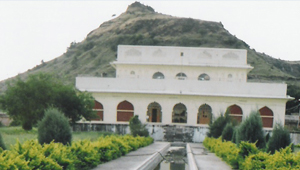
 Bani Begum Garden is a graceful garden located about 24 km from Aurangabad. The garden is known for its lush green appearance and comforting atmosphere. It got its name from the tomb of Bani Begum who is the wife of Aurangzeb’s son which is located in middle of this garden. Bani Begum Garden is a graceful garden located about 24 km from Aurangabad. The garden is known for its lush green appearance and comforting atmosphere. It got its name from the tomb of Bani Begum who is the wife of Aurangzeb’s son which is located in middle of this garden.The garden is constructed in various styles. Massive domes, fountains and fluted pillars can be seen in the garden. The garden is an example of the Mughal style and architecture of the departed period. Tourists visiting Aurangabad never return before visiting the beautiful Bani Begum Gardens. |
|
Khuldabad |
Top^ |
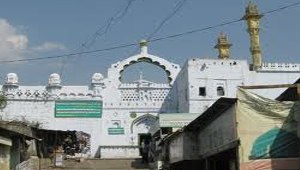 Khuldabad is located at distance of about 3 km from Ellora. A large scale Sufi had been migrated to Khuldabad in 14th century, as several Sufi saints of the Chishti ordered to reside Khuldabad (Abode of Eternity). Khuldabad is located at distance of about 3 km from Ellora. A large scale Sufi had been migrated to Khuldabad in 14th century, as several Sufi saints of the Chishti ordered to reside Khuldabad (Abode of Eternity).There is the Dargah, or tomb of Moinuddin Chishti, the spiritual guide of the Mughal emperor, Aurangzeb, within this sacred complex. Aurangazeb's tomb is also there near the tomb. This simple tomb remains as an eloquent evidence to the staunch faith and Spartan lifestyle of this pious Muslim ruler. The tomb was constructed only with the few rupees he had earned by stitching cloth caps. "No marble sheets should shield me from the sky as I lie there one with the earth" is the line, which is inscribed on his gravestone elegantly in Persian calligraphy. Nearest airport is at Aurangabad and Jalgoan. There are regular buses between Aurangabad and Ellora. |
|
Gul Mandi |
Top^ |
 Gul Mandi is also one of the largest bazaars in Aurangabad. Exchanging also takes place in these markets. Gul Mandi is also one of the largest bazaars in Aurangabad. Exchanging also takes place in these markets.The heart of the old Aurangabad. This area is mostly crowded, as 'mandi' means market. An example of how a typical Indian marketplace is like. Situated right here is the famous 'Supari Hanuman' temple. It's spire is ornately carved and painted. Observe the laning system, the architecture of the old buildings here. Varities of goods are sold in this market. The products changes on all days and the products available depends on the day the market is visited. But these bazaars do not have genuine shopping malls. The best quality products are sold in the markets. The special products are the Paithani saris. Different varieties of garments and Himroo silk stuff is also available. |
|
Ghrishneshwar Temple |
Top^ |
 Ghrishneshwar is also known as Ghushmeshwar. The emergence of linga is explained in the Shivpurana. Legend associated with the temple is that on the mountain of Devagiri, there lived a Brahmin Sudharm with his wife Sudeha, teaching Vedas. They were not in peace with themselves because they did not have any child to continue in their legacy. So, failing in all her attempts to conceive one, Sudeha married her sister Ghushma (in some places mentioned Kusuma), to her husband Sudharm. On the advice of her sister, Ghushma used to make 101 lingas and worship them. Ghrishneshwar is also known as Ghushmeshwar. The emergence of linga is explained in the Shivpurana. Legend associated with the temple is that on the mountain of Devagiri, there lived a Brahmin Sudharm with his wife Sudeha, teaching Vedas. They were not in peace with themselves because they did not have any child to continue in their legacy. So, failing in all her attempts to conceive one, Sudeha married her sister Ghushma (in some places mentioned Kusuma), to her husband Sudharm. On the advice of her sister, Ghushma used to make 101 lingas and worship them.In the nearby lake the lingas used to be discharged. Gradually with the blessings of Lord Shiva, Ghushma became a proud mother of a healthy and pretty baby boy. Sudeha, seeing her sister`s piety towards the Lord, was engulfed with jealousy and envy, in the process, murdering the son, in cold blood. |
|
Dargah of Pir Ismail |
Top^ |
 The Dargah of Pir Ismail is a memorial to Prince Aurangzeb's tutor, Pir Ismail. The garden in the Dargah consists of many destroyed water tanks and fountains. The gate is regal in its form and it has a large pointed archway, which forms a sort of portico. The original entrance is through a small pointed arch, which is at the rear. The parapet is carefully decorated and the facade has three small windows with pointed arches. The corners of the terrace has a tower which is mounted with a rounded dome and spire whilst the Dargah is square and has five pointed arches on each side. The Dargah of Pir Ismail is a memorial to Prince Aurangzeb's tutor, Pir Ismail. The garden in the Dargah consists of many destroyed water tanks and fountains. The gate is regal in its form and it has a large pointed archway, which forms a sort of portico. The original entrance is through a small pointed arch, which is at the rear. The parapet is carefully decorated and the facade has three small windows with pointed arches. The corners of the terrace has a tower which is mounted with a rounded dome and spire whilst the Dargah is square and has five pointed arches on each side. |
|
Siddharth Garden |
Top^ |
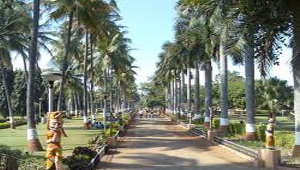 The Siddharth Garden is situated in the heart of the city. It is placed beside the Central Bus Stand of Aurangabad which also lies near the Station Road. The garden is spread over a large area and it has a green outlook. The Siddharth Garden is one of the most popular outdoor recreational centers of Aurangabad. There is a small aquarium in the garden. The Siddharth Garden is situated in the heart of the city. It is placed beside the Central Bus Stand of Aurangabad which also lies near the Station Road. The garden is spread over a large area and it has a green outlook. The Siddharth Garden is one of the most popular outdoor recreational centers of Aurangabad. There is a small aquarium in the garden.Large areas of grass flanked by shurbs and trees is fantastic to watch. There is also a good spot for picnic. Variety of games can also be played in the garden as there are several setups of play area in the garden for the kids. The special attraction of the garden is a Zoo. The zoo of the garden has various animals like tigers, lions, lepoards, deers, snakes, elephants and many other variety of animals. It is a good time pass to visit this garden and zoo if you are not willing to go long distance out of city and a visit only for a short picnic. |
|
Daulatabad |
Top^ |
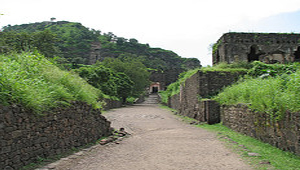
 Daulatabad, is a 14th century fort city in Maharashtra, India, about 16 kilometers northwest of Aurangabad. The place, was once as known as Deogiri, (circa the sixth century AD, when it was an important uplands city along caravan routes and is now but a village, based around the former city of the same name. Daulatabad, is a 14th century fort city in Maharashtra, India, about 16 kilometers northwest of Aurangabad. The place, was once as known as Deogiri, (circa the sixth century AD, when it was an important uplands city along caravan routes and is now but a village, based around the former city of the same name.Almost 800 years ago, Daulatabad, then called 'Devigiri' was a thriving city. It was founded by Bhillamraja of the Yadava dynasty in 1187 AD. Later, the fort of Daulatabad passed through the hands of several dynasties in the Deccan. Less than 150 years after the Yadava dynasty, Daulatabad also became the capital of India for a short period during the reign of Sultan Muhammad-bin-Tughluq, who gave the city its present name. But very soon the charm of this ancient city faded. |
|
Naukonda Palace |
Top^ |
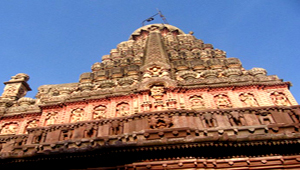 Naukonda plalce was the home of Nizam Ali Khan when he was at Aurangabad. The palace used to consist of the Diwan-i-Am(Hall of public audience), Diwan-i-Khas(Hall of private audience), hamam(bathing area), a mosque, garden and a water tank. The palace is however in a state of ruin now. Naukonda plalce was the home of Nizam Ali Khan when he was at Aurangabad. The palace used to consist of the Diwan-i-Am(Hall of public audience), Diwan-i-Khas(Hall of private audience), hamam(bathing area), a mosque, garden and a water tank. The palace is however in a state of ruin now.When Nizam Ali Khan was at Aurangabad, he occupied the Naukonda Palace. The whole building is in ruins now. The palace consists of 5 zananas. It also consists a Dewan-i-Am, a Dewan-i-Khas, a masjid and a Kachari. Each section of the palace is provided with a garden and a water tank. The central part of the palace is in a good state. Also a hamam meaning hot bath which is attached to the palace is also in a fine shape. The wood work and the ornament plaster are missing. The kachari consists a gadi of the Nizams. |
|
Killa Arak |
Top^ |
 In 1692, Aurangzeb ordered a palace to be built. This palace became known as the Killa Arak. The palace has not survived in its original form leaving only ruins, and these can be found from Delhi to Mecca gate. The Killa Arak had four entrances and a Nakarkhana for musicians. The Dabar hall and the Jumma Masjid are the only parts of the palace to remain and are still of some interest. For the use for sport, a piece of ground, which is close to the Masjid, was walled. The gate to the ground carries an inscription, which dates back to 1659 AD. The majestic throne-room of Aurangzeb is now humbly located in a garden and has a rostra appearance. The pavilion while plain and simple is still elegant and can be entered by a gallery from behind. In 1692, Aurangzeb ordered a palace to be built. This palace became known as the Killa Arak. The palace has not survived in its original form leaving only ruins, and these can be found from Delhi to Mecca gate. The Killa Arak had four entrances and a Nakarkhana for musicians. The Dabar hall and the Jumma Masjid are the only parts of the palace to remain and are still of some interest. For the use for sport, a piece of ground, which is close to the Masjid, was walled. The gate to the ground carries an inscription, which dates back to 1659 AD. The majestic throne-room of Aurangzeb is now humbly located in a garden and has a rostra appearance. The pavilion while plain and simple is still elegant and can be entered by a gallery from behind. |
|
Cannought |
Top^ |
 Cannought is a shoppers paradise of Aurangabad. The place has a Kam Khab, the golden and silver thread blended with cotton to make the dainty Himroo shawls and sarees. These products are available in many showrooms in and the market area. Cannought is a shoppers paradise of Aurangabad. The place has a Kam Khab, the golden and silver thread blended with cotton to make the dainty Himroo shawls and sarees. These products are available in many showrooms in and the market area.Complex patterns of flowers, peacocks, parrots and the caves of Ajanta and Ellora are used as borders of sarees. Paithan sarees are being weaved and they follow age old traditions. The shopping market of Cannought is now becoming very popular. It is making its place slowly but surely amongst the younger generation. |
|